Showing posts with label Humility. Show all posts

Thursday, April 8, 2021

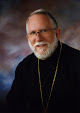
Fr. Joseph Huneycutt: The Priesthood as Penance


 Over the years I’ve come to have profound respect for clergy who can keep their mouth shut and carry on serving God and Man with love and joy. Believe me, it would be much easier to become resentful, bitter, and mean. Even worse, the priest could become an old gossip, letting junk just fall out of his mouth with ease. The temptations are always there. 
One priest told me told me of his inaugural conversation with his bishop wherein he expressed interest in ordination. The crusty old man looked him straight in the eye and said, “Boy, do you pray?” 
“Why yes, I pray every day . . .” 
“Pray to God you don’t have this curse!” said the bishop. 
I think the old man had let the vocation get the better of him. It happens. Or, as one priest said: “I wanted to be a priest out of arrogance; God allows me to be one as a penance.”
+Fr. Joseph Huneycutt, from One Flew Over the Onion Dome, Chapter 17 Concerning the Clergy

Wednesday, April 7, 2021

Elder Cleopas (Ilie): The uncountable benefits of Humility


 The benefits of humility are impossible to count, since humility alone, without any other good deed, can save a man. 

Saturday, April 3, 2021

St. Euthemius of Suzdal: The Greatest Virtue


 On being askes which is the greatest virtue, he would reply: "That which is carried out in secret."
+St. Euthemius of Suzdal, from his life in The Synaxarion, volume 4, entry for April 1.

Monday, March 22, 2021

Bishop Barnabas (Belyaev): On true prayer and humility


 It seems to us that we pray very well. Some schema-monks actually say many prayers, only it is not worth a thing. It is a "castrated" work; in reality it goes nowhere. And if this is not so, then how can one explain that a priest can stand thirty-odd years before the throne of God - he should have become a wonderworker or a clairvoyant long ago. However, not only is he unable to see what goes on within another's soul, but he does not even understand his own. Perhaps we shall accuse God of favoritism? No. The fact of the matter is that God bestows these gifts not for the sheer labor of such a one, but for humility. The latter quality is acquired only through pure prayer, and pure prayer only through humility.
+Bishop Barnabas (Belyaev), from New Confessors of Russia by Archimandrite Damascene (Orlovsky), chapter 7.

Saturday, March 20, 2021

Unnamed Elder from Pherme: Do not suppose you have done good


 It is prideful for you to suppose that when you were in the world you did good and lived well; for this is how the Pharisee thought (when he was boasting in the Temple) and he lost all the good that he had accomplished.(cf. Luke 18:11-12,14) Now if, on the other hand, you think that you are not doing anything good, this is sufficient for you to be saved; for this is humility. It was in the way (through humility and self-deprecation) that the Publican, who had done nothing good, was justified. (cf. Luke 18:13-14). A sinful and negligent man who feels contrition of heart and humility is more pleasing before God that one who does many good deeds, but is of the opinion that he has completely succeeded in accomplishing something good.
+Unnamed Elder1 from Pherme, from Themes in Orthodox Patristic Psychology, book one: Humility
1Possibly Abba Theodorus or Abba Lucianus.

Saturday, March 13, 2021

Elder Cleopa (Ilie) of Sihastria: Humility


 Brother: Reverend Father, as a simple and slow to understand person, it seems to me that these Holy Fathers talk too intricate and too little about humility. This is why, Reverend Father, please, if you can, tell me some teachings about humility, which are simpler and closer to my understanding.
Abbot: Brother John, if the testimonies on humility from these three Holy Fathers seem too difficult and subtle for you and you want to understand easier teachings about humility, read the Lives of the Fathers,
especially chapter 4 and 10 where you can find among others: A brother asked an old man: “Father, what is humility“. And the old man answered, "Humility is considering yourself unworthy and more of a sinner than everyone else and be meek with everyone”. And the brother asked: “What it means to be meek with everyone?” And the old man said, “To not search and see other people’s sins, but to see your sins and evils, and to pray unceasingly to God for your forgiveness” (Chapter 10, 13).
Brother John, here is a rather simple and easy teaching about humility. Let’s pray for God’s help not to forget it, and to do as this happy old man is teaching us, to always have in front of our mind’s eyes the
weight of our sins, to weep because of them and to never condemn anyone.


Friday, March 12, 2021

Elder Neophytus the Hadji-Georgite: Obedience is the Holy Path to Salvation


 My child! Obedience is a holy path that leads a monk to salvation. Obedience is the door to Paradise. The monk who acquires it tastes Paradise; he has already attained the angelic state. The angels in Heaven are filled with humility, while Satan and his battalions lost the glory of Heaven by their pride. Losing humility, they lost also their place of light. O humility! It places us in Paradise! How shall we find it? Only in obedience do you safely find humility. Only in obedience do you safeguard the blessedness of Paradise. By their disobedience the First Parents lost Paradise, while Christ, 'becoming obedient until death,' opened Paradise again. 'Obedient until death!' There three words hide the whole extent of the mystery of obedience. Obedience equals life; disobedience equals death.
+Elder Neophytus the Hadji-Georgite, quoted in the life of Elder Ignatius the Father Confessor, Contemporary Ascetics of Mount Athos, Volume 2.

Saturday, March 6, 2021

St. Paisios of Mount Athos: On overcoming bad habits


 Geronda, can a bad habit be broken immediately?
First of all, man must realize that such a habit is harmful to him, and then he must be willing to struggle to break the habit. One must have a lot of willpower in order to be able to break a bad habit al at once. Just as the rope rubs against the edge of the well and over the years forms a small groove that holds the rope in place, every habit forms a groove in the heart, making them difficult to get rid of. This is why we must be very careful not to develop bad habits, because it takes a lot of humility and great willpower to overcome them. Father Tychon on the Holy Mountain used to say, "my child, a good habit equals virtue; a bad habit equals passions."
In any case, I have found that when a man while struggling, continues to make the same mistakes and does not change, the reason is usually egoism, self-love and self-interest. Humility and love are missing, thus blocking divine intervention. The person himself does not allow God to help him. If, for example, God helps him overcome a particular passion, such a person will selfishly take credit for it and assume that it was his own achievement, without any help from God.
+St. Paisios of Mount Athos, from Spiritual Counsels volume 3, Spiritual Struggle, part 3 chapter 1.

Wednesday, January 20, 2021

St. Euthymius the Great: Make love the source and aim of every good deed.


 Always make sure that sincere love - the bond of all perfection - is the source and aim of every good deed. Every virtue grows in strength through love and humility, with the aid of experience, of time and of grace. But love prevails over humility, for it was through love that the Word of God humbled Himself by making Himself equal to us."
+St. Euthymius the Great, from his last instructions to his disciples, in The Synaxarion Volume 3, in his entry for January 20.

Tuesday, January 19, 2021

St. Macarius the Great: Three anecdotes from his life


 One day someone asked [St. Macarius] how to make progress on the path to salvation. The saint sent him to the cemetery, first to insult the dead then to praise them, and when he came back, he said: "Look, the corpses said not a word to you in reply. Similarly, if you want to be saved you too must become like a dead man, making as little of the contempt of men as of their praises."
...
He acquired expert knowledge of the different kinds of demon. He said that they can be divided into two main categories: one consisting of the spirits which arouse passions such as anger and covetousness; and the other, more dreadful, of the spirits which mislead men by spiritual illusion, blasphemy and heresies.
...
His exceeding charity led him to pray with tears even for the damned. One day as he was walking in the desert, he came upon the skull of a pagan priest, which addressed him, saying: "Each time that you have pity on those who are in torments - on us who are plunged into the fire with our faces pressed against the backs of the one's in front - we receive a measure of comfort in being able for a while to see the faces of our fellow sufferers."
+St. Macarius the Great of Egypt, from his life in The Synaxarion Volume 3, entry for January 19.

Sunday, January 17, 2021

St. Antony the Great: Endeavor to possess only the Kingdom


 Let us endeavor to possess nothing except what we shall take with us to the grave, namely, charity, meekness, righteousness and so on. Virtue, that is to say, the Kingdom of Heaven, needs only our good will, for it is within us. Actually, it consists simply in keeping the spiritual part of our soul in the purity and beauty in which it has been created.
+St. Antony the Great, from The Life of St. Antony, by St. Athanasius.

Friday, January 15, 2021

St. Isaac the Syrian: Humility in prayer


 When the humble-minded man approaches prayer or becomes worthy of it, he still does not dare to petition God or ask for anything. He does not yet know for what he should pray; all his thoughts are silent, awaiting only the mercy and the will of the God Whom he worships. His face is bowed to the earth, and the inner eye of his heart is raised to the exalted gates of the Holy of Holies. There is He Whose dominion is the darkness that dims the eyes of the Seraphim, Whose goodness inspires countless legions of angles to worship in complete silence. The boldness of this man only extends to the follow words that he dares utter in prayer: "O Lord, let it be with me according to Thy will." (cf. Luke 1:38).
+ St. Isaac the Syrian, from Ascetic Homilies, homily 49.

Friday, January 8, 2021

St. George the Chozebite: On obedience and humility


 Believe me, even if someone were able to make heaven and earth anew, but regarded his neighbor with proud contempt, he would labor in vain and his portion would be with the hypocrites (cf Matt 24:51). A man cannot approach God unless he is at peace with his neighbor. The sins and passions all have pride as their common source and they lead to death; while obedience and submission to the Lord are life, joy, and light.
+St. George the Chozebite, from The Synaxarion, volume 3, in his entry for January 8th.

Thursday, December 31, 2020

St. Melania the Roman: The virtues are vain without love


 All the virtues and all ascesis are in vain without love. The Devil can easily imitate all our virtues; he is conquered only by humility and charity.
+St. Melania the Roman, from The Synaxarion, Volume 2, her entry on Dec 21st.

Sunday, December 27, 2020

St. Philaret of Moscow: He comes as a newly born babe


 He comes not as a fierce man of war, threatening all things living with death, but as a newly born babe, bringing the hope of rebirth and life into the entire realm of death; He comes—but the land of destruction does not meet, does not embrace, does not praise, does not even see its Savior, and does not hear the Word of God keeping silence in a manger. Virtually in vain does the glory which Jesus Christ had with God the Father before the world was (John 17:5) on the lips of the angels, follow Him descending into the world and pursuing Him, attain even unto the earth.
St. Philaret of Moscow, from Select Sermons, Sermon 21 On the Necessity of the Incarnation

Wednesday, December 23, 2020

St. Niphon of Constantiana: On humility and life with Christ


 Place yourself below everybody else and you will live in Christ's company.
+St. Niphon of Constantiana, quoted in his life in The Synaxaria, Volume 2, entry for December 23

Tuesday, December 15, 2020

Matthew the Poor: Growth in Humility


 It is mentioned concerning the pure saintly fathers, that after beholding the Lord, they became even more humble. Thus we hear of righteous Job, who when the eyes of his heart were finally opened and he beheld the Lord, he counted himself as dust and ashes... A1so Isaiah the prophet after rebuking the people for their sins, saw the Lord and immediately humbled himself declaring; “Woe is me, for I am undone! Because I am a man of unclean lips." (Isaiah 6:5). And so the saints‘ great humility is in fact owing to what they have seen of God’s glory. Thus the soul attains true humility on earth by beholding - from afar - the glory which it shall receive (undeservedly).
+Matthew the Poor, from St. Anthony, a Biblical Ascetic, Eleventh Ascetic Principle


Saturday, December 5, 2020

St. Ephraim the Syrian: On our proper response to the Incarnation


 Now the day of mercy has shown forth! Let no one persecute his neighbor with revenge for the wrong he has caused him! The day of joy has arrived! Let no one be guilty of causing sorrow and grief to another person. This is a cloudless and bright day! 
Let anger be stilled for it disturbs peace and tranquility. This is the day in which God descended to sinners! Let the righteous man be ashamed to exalt himself over sinners. This is the day when the Lord of creation came to servants! Let the master of the house humble himself in similar love to his servants. This is the day on which the Wealthy One became poor for our sake! Let not the rich be ashamed to share their table with the poor.
+St. Ephraim the Syrian, from A Spiritual Psalter

Thursday, November 12, 2020

St. Dorotheos of Gaza: On Arrogance and Humility


 Hear what the Lord says, "Learn from Me, for I am gentle and lowly in heart, and you will find rest for your souls" (Matt 11:29). Here briefly, in one word, He has shown us the root and cause of every evil and the treatment for it and also the cause of every good. He has shown us that arrogance defeated us, and that it is not possible to receive mercy, other than through its opposite, humility. As arrogance produces contempt and destructive disobedience, so humility produces obedience and the salvation of our souls. I have real humility in mind, not that of words and external forms, but of a true humble disposition that is cultivated in the heart itself and within this mind-set. This is what He means when He says, "for I am gentle and lowly in heart".
+St. Dorotheos of Gaza, from Abba Dorotheos: Practical Teaching on the Christian Life, Lesson 1 On Renunciation, #7.

Tuesday, November 3, 2020

Abba Isaiah of Scetis: On Slander and humility


 If a brother harms you and someone else slander him in front of you, guard your heart so that evil is not revived so that evil is not revived within you. Instead, remember your own sins before God and that you want Him to forgive you these, and "do not return evil" (Rom 12:17 against your neighbor.
If you are out with brothers who are unknown to you and there happen to be younger than you, give them the honor of priority. If you visit the house of a friend, allow the other precedence over you in everything, whether at the washing basin or at the dinner table. And do not give yourself priority because you are supposedly their guest, but allow them the honor, saying, "God has been merciful to me on account of you".
+Abba Isaiah of Scetis, from Ascetic Discourses, discourse 4.