Showing posts with label Love for God. Show all posts

Tuesday, February 16, 2021

Elder Cleopas (Ilie): On the ends of Wisdom


 Wisdom has two ends. The lower is the fear of God, and the upper is the love of God, which is the "link of perfection".

Thursday, January 28, 2021

St. Dorotheos of Gaza: Beginning and Perfect Fear of God


 There are two kinds of fear. One is preliminary, the other is perfect. One is proper to the beginner, that is, for the sake of their piety. the other belongs to the perfected saints who have acquired a measure of love. For example, whoever fulfills the will of God because of the fear of tortures is, as we said, still a beginner. He does not yet do good for the sake of the good, but from the fear of punishment. Another does the will of God for its own sake, and he does it in order to please God. Such a person knows what is essentially good. Such a person has come to know what it is to be with God. Such a person has the true love that the beloved apostle called perfect. This love leads him to perfect fear, because such a person fears and remains faithful to the will of God not form fear of punishments, not to avoid eternal suffering, but because, as we have said, having tasted the very sweetness of being with God, he fears falling away, fears being deprived of God's presence. This perfect fear, acting on the principle of love, casts out the preliminary fear. Therefore, it is said, "perfect love casts out fear"(1 John 4:18). However, it is impossible to attain to perfect fear without first passing through preliminary fear.
+St. Dorotheos of Gaza, from Discourses and Sayings, #4 On the fear of God

Thursday, January 21, 2021

St. Maximos the Confessor: To love God is to love every man


 The person who loves God cannot help loving every man as himself, even though he is grieved by the passions of those who are not yet purified. But when they amend their lives, his delight is indescribable and knows no bounds.
+St. Maximos the Confessor, from Four Centuries on Charity, Century 1, #13

Tuesday, January 12, 2021

Hieromonk Gregorios of Koutloumousiou: The Eucharist as living in Christ


 Between the first visitation of the Word and His Second Coming, there is the present age. We Christians struggle to love the Lord, because love helps us to live the mystery of His visitation. "If a man loves me, he will keep my word, and my Father will love him, and we will come to him and make our home with him" (John 14:23). Love perpetuates God's visitation and transforms man into a dwelling-place of God and a dweller in God: "God is love, and he who abides in love abides in God, and God abides in Him" (1 John 4:16). When we participate in the Mystery of divine love - in the Eucharist and Holy Communion - we are celebrating the Mystery of God's visitation in the world and in our lives. As Christ says: "He who eats my flesh and drinks my blood abides in me, and I in him" (John 6:56).
+Hieromonk Gregorios of Koutloumousiou, from The Divine Liturgy, a Commentary in the Light of the Fathers, Chapter 6 Diptychs and Prayers, Visit us, O God.

Saturday, December 26, 2020

St. Ignatius Brianchaninov: On love of the will of God


 Blessed is the man whose entire will is in the keeping of God's law (cf Ps 1:2). Blessed is the heart that has ripened in the knowledge of God's will, that has seen that "that the Lord is good" (Ps 33:9), that has acquired this vision by tasting of the commandments of the Lord, and that has united its will with the will of the Lord. Such a heart is the blessed man. Blessed is the heart that is afire with divine zeal! Blessed is the heart that burns with the insatiable desire to do the will of God! Blessed is the heart that sweetly suffers beyond all endurance with the love of God! Such a heart is the place, home, bridal chamber, and throne of blessedness!
From the early morning, the eagle sits on the tip of a high crag. Its sparking eyes hungrily seek out prey. It rises into the blue sky, swims in the wide expanse on extended wings, and seeks its prey. And when it finds its prey, it becomes an arrow, a lightning bolt as it attacks; then it rises like an arrow again with its prey and disappears. Once the chicks are fed, the eagle again is on watch, either on the cliff or in the sky. Similar to this is the heart that is infected with the wound of incurable love of the commandments of God! In this love of blessedness. The commandments are not merely found in the doing. Within them is hidden, and through them is revealed, spiritual wisdom.
+St. Ignatius Brianchaninov, from The Refuge, Anchoring the Soul in God, Chapter 1

Monday, December 21, 2020

St. Mark the Ascetic: On hearing Christ with gladness


 Every word of Christ shows us God's mercy, justice and wisdom, and, if we listen gladly, their power enters into us. That is why the unmerciful nd the unjust, listening to Christ with repugnance, were not able to understand the wisdom of God, but even crucified Him for teaching it. So we, too, should ask ourselves whether we listen to Him gladly. For He said: "He who loves Me will keep My commandments, and he will be loved by My Father, and I will love him, and will manifest Myself to him" (cf. John 14:21). Do you see how He has hidden His manifestation in the commandments? Of all the commandments, therefore, the most comprehensive is to love God and our neighbor. This love is made firm through abstaining from material things, and through stillness of thoughts.
+St. Mark the Ascetic, from On Those who Think that They are Made Righteous by Works: 226 Texts, #223, in The Philokalia, volume 1.

Saturday, December 12, 2020

St. Herman of Alaska: On Loving God


 Poor sinner that I am, I have been trying for forty years to love God, and I cannot say that I love Him as I ought. To love God is to think always of Him, to serve Him night and day, and to do His will in everything.
+St. Herman of Alaska, from The Synaxarion, Volume 2, entry for December 13.

Wednesday, November 18, 2020

Elder Aimilianos of Simonopetra: A Prayer for Monastics


 I would like simply to express a single prayer for all of us. Let us have confidence in God, the memory of Him and a diligent love for Him. What are we, after all? And what is He? All of humanity, the whole universe, and all of us here with all the greatness of our hearts and labors and love, would not be able to meet the breadth of God's little toe, nor the billionth part of His holiness.
So let us admit to ourselves that we are useless and fit as witnesses only to be crushed beneath the tread of that toe of God's love, be trodden in the winepress of the ascetic and Christ-delighting monastic life, be poured out as new wine to gladden the Lord and be changed into the sacrament of the world to come.
+Elder Aimilianos of Simonopetra, from Martyrdom: Foundation of Orthodox Monasticism, in The Living Witness of the Holy Mountain.

Monday, November 16, 2020

St. Ilias the Presbyter: On the remembrance of God's coming.


 Blessed is the soul that, because it expects its Lord daily, thinks nothing of the day's toil or of the night's, since He is going to appear in the morning.
+St. Ilias the Presbyter, from Gnomic Anthology IV, # 102, in The Philokalia, Volume 3.

Wednesday, November 11, 2020

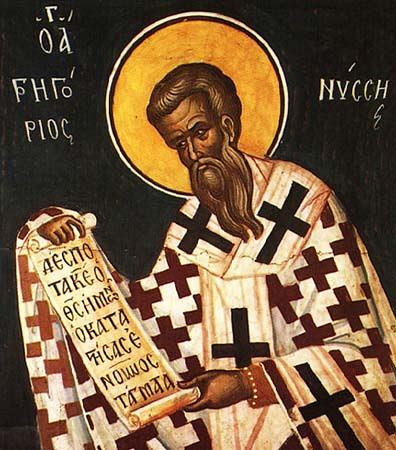
St. Gregory of Nyssa: On our image and likeness to God


 Being like the divine is not our function, for is it the product of human ability, but it is part of the generosity of God who freely, at the birth of the first man, gave our nature a likeness to Himself.
The human effort extends only to this: the removal of the filth which has accumulated through evil and the3 brining to light again the beauty in the soul which we had covered over. It is such a dogma that I think the Lord is teaching in the Gospel to those who are able to hear wisdom when it is mysteriously spoken: "The kingdom of God is within you" (Luke 17:21). This saying shows, I believe, that the goodness of God is not separated from our nature, or far away from those who choose to seek it, but it is ever present in each individual, unknown and forgotten when one is choked by the cares and pleasures of life, but discovered again when we turn our attention back to it.
+St. Gregory of Nyssa, from Ascetical Works, On Virginity.

Thursday, November 5, 2020

St. Maximus the Confessor: Two kinds of fear of God


 The first [kind of fear of God] is generated in us by the threat of punishment. It is through such fear that we develop in due order self-control, patience, hope in God and dispassion; and it is from dispassion that love comes. The second kind of fear is linked with love itself and constantly produces reverence in the soul, so that is does not grow indifferent to God because of the intimate communion of its love.
+St. Maximus the Confessor, from Four Centuries on Love, first century, # 81

Monday, October 26, 2020

St. Macarius the Great: On longing for God


 Just as one who suffers from a burning fever is sickened by and rejects any food of drink that you may offer him even if it were very delicious, because he is on fire with a fever and is really burning up from it, so those who are burning with  holy and venerable longing for the heavenly Spirit are wounded in their soul with love for the love of God. They burn with a divine and heavenly fire which the Lord came on this earth to enkindle. How He wishes that is be quickly accomplished! They are enflamed with a heavenly longing for Christ so hat everything that is of this world, considered as outstanding and precious, is reputed base and despised on account of the fire of their love for Christ who binds them, burns them, and enflames them with a passion for God and for the heavenly good things that lead to love. From such a love nothing of the earth or underworld will separate them, as the Apostle Paul testified: "Who will separate us from the love of Christ?" (Rom 8:35), and all that follows.
+St. Macarius the Great, from Fifty Spiritual Homilies, Homily 9

Tuesday, October 20, 2020

Peter Bouteneff: The criterion of love


 What we learn from the Gospels’ descriptions of Christ and then from St Paul, and the Church Fathers and Mothers - is not only that “Thou shalt not” becomes “You ought to.” The commandments become something that people have to discern for themselves and live into, on the basis of something bigger. The root principle is, “Love God and love one another, including your enemies.” With those, the rest Will fall into place. You could say that there is barely even a need to explicitly prohibit specific misdeeds such as murder (or even anger), fornication (or lust), lying (or stretching the truth), because none of them satisfies the criterion of love.
+Peter Bouteneff, from How to be a Sinner, chapter 2, What is Sin?

Monday, October 12, 2020

Abbot Tryphon (Parsons): Determining our priorities


 The way to determine whom or what you love the most is to see where your loyalties lie. When you face a choice between God and anything else, what is your choice? Do you choose to attend church on Sunday, or do you choose to sleep in? Do you prioritize you life around your relationship with God, or do sporting events, vacations, family outings, entertainment, or friends take center stage? Do prayer, reading the Bible, serving others, financially supporting the Church and its mission, and giving alms serve as your central theme, of do you choose personal gain and pleasure as central to your life?
+Abbot Tryphon (Parsons), from The Morning Offering, entry for January 4.

Friday, September 18, 2020

Nicholas Arseniev: Christ in us, Christ in the other


 To Jacob Bƶhme1 after his conversion, the "whole external world with its substance, is a covering of the spiritual world"; he feels the presence of God in all creatures, even in herbs and grasses. But especially convincing and the most deeply moving of all these encounters with God in the world which surrounds us are - as we have already said - our encounters with God through and in our fellow-man. When one has known what it is to be in deep distress, alone, seeing no help around, and suddenly a helping hand stretches towards you and a friendly voice speaks comfort and love to you, surely one feels in such a moment that God has spoken, that God is near, that He has revealed Himself through the intermediary of the helping, loving fellow-creature. But it is even more moving to be given the immense privilege of suddenly becoming the channel, the bringer, the living representative of God's active, helping love in relation to one's fellow-man. The one who helps is sometimes even more innerly shaken and overwhelmed that the one who receives the benefaction. "Who am I, O Lord, that Thou dost that through me?" (cf. Ex 3:11). He feels the presence of the Lord in the suffering brother. It is one of the highest and most sacred experiences in our life, something which remains, which moves us ourselves deeply, awaking not self-complacency but deepest humility and gratitude. "O Lord, when have we seen Thee hungry and feed Thee, or thirsty and give Thee drink? When have we seen Thee a stranger and take Thee in, or naked and clothed Thee? Or when have we seen Thee sick, or in prison, and come unto Thee?’ And the King will answer and say to them, ‘Verily I say unto you, inasmuch as you have done it to one of the least of these My brethren, you have done it unto Me." (Matt 25:37-40). We feel the truth of these words, we feel His presence behind and in the suffering brother, even the least of our brethren, often so uninteresting, so average-looking, so helpless, so alone, but - so near to Him, so closely connected with Him. This is the immanence of the Transcendent God.
+Nicholas Arseniev, from Revelation of Life Eternal, chapter 1, Principles of Religious Cognition, section 5.

Jacob Bƶhme( +1624) German philosopher, mystic and Lutheran theologian.

Wednesday, September 16, 2020

St. Maximos the Confessor: The relationship between prayer and love for God

 He who genuinely loves God prays entirely without distraction, and he who prays entirely without distraction loves God genuinely. But he whose mind is fixed on any worldly thing does not pray without distraction, and consequently he does not love God.
+St. Maximos the Confessor, from The Four Centuries on Charity, century 2, #1.

Monday, September 14, 2020

Abbot Nikon (Vorobiev): The path of humility

The Lord had to choose a path for man which would preclude his becoming proud, as the devil did, even in the afterlife, and which would help him to consciously grow in his love for God, to submit to Him wholly forever, without the possibility of falling away.
And since the characteristic of the soul opposite pride is humility, the Word of God, the Mother of God and the Holy Fathers value humility above all. Without humility no spiritual labor will help a person, for he can always fall into pride and fall away from God. Love also joins man to God, but without humility there can be no love.
+Abbot Nikon (Vorobiev), from Letters to Spiritual Children, letter #24

Saturday, September 12, 2020

St. Philotheos Zervakos: Advice to a deacon

Be forever God-loving [Ļ†Ī¹Ī»ĻŒĪøĪµĪæĻ‚] and humble. These two counsels do I give to you, to be philotheos [God-loving] all your life long, that is to love God and be humble. If you love God, Who is love, God will remain with you and you with God. If God is with us no one is against us, and the Spirit of the Lord shall rest in the hearts of the meek. Wherever there is humility, pride flees away; wherever Christ is, the devil flees away. On these two commandments and virtues hang all the Law and the Prophets.
+St. Philotheos Zervakos, from Paternal Counsels, Vol 1, Advice to a deacon

Monday, August 24, 2020

Fr. Alexander Schemann: Hunger for God

The "original" sin is not primarily that man has "disobeyed" God; the sin is that he ceased to be hungry for Him and for Him alone, ceased to see his whole life depending on the whole world as a sacrament of communion with God. The sin was not that man neglected his religious duties. The sin was that he thought of God in terms of religion, that is, opposing him to life. The only real fall of man is his non-eucharistic life in a non-eucharistic world. The fall is not that he preferred world to God, distorted the balance between the spiritual and material, but that he made the world material whereas he was to have transformed it into "life in God", filled it with meaning and spirit.
+Fr. Alexander Schemann, from For the Life of the World, chapter 1, #4.

Wednesday, August 5, 2020

Tito Colliander: The Transfer of Love from Self to Christ

If we move out of our self, whom do we encounter? asks Bishop Theophan. He supplies the answer at once: We meet God and our neighbor. It is for this very reason that denying oneself is a stipulation, and the chief one, for the person who seeks salvation in Christ: only so can the center of our being be moved from self to Christ, who is both God and our neighbor.
This means that all the care, concern and love that we now lavish on ourselves is then quite naturally and without our noticing it transferred to God and thereby to our fellowmen.
+Tito Colliander, from Way of the Ascetics, Chapter 7 On the Transfer of Love from the Self to Christ.