Showing posts with label God's Love for us. Show all posts

Sunday, February 28, 2021

St. Nikolai Velimirovich: Three characteristics of Love


 He who has no patience with us when we sin does not love us. Neither does he love us who does not forgive us when we repent of our sin. And he loves us least of all who does not rejoice at our improvement.
Patience, forgiveness and joy are the three greatest characteristics of divine love. They are characteristic of all real love - if there is such a thing as real love outside divine love. Without these three characteristics, love is not love. If you give the name "love" to anything else, it is as though you were giving the name "sheep" to a goat or a pig.
+St. Nikolai Velimirovich, from Homilies volume 1, #10. Sunday of the Prodigal Son

Monday, February 8, 2021

St. John Chrysostom: God's love and our selfishness


 Let us now be abashed at His love, let us be ashamed at the excess of His lovingkindness, since He for our sakes spared not His Only-begotten Son, yet we spare our wealth to our own injury; He for us gave His Own Son, but we for Him do not so much as despise money, nor even for ourselves.
+St. John Chrysostom, from Homily 17 on John 3:12-13, #3

Thursday, February 4, 2021

Fr. Michael Shanbour: Understanding God's Grace


 If we desire to feel the warmth of the sun, we must make the physical effort to walk outdoors and expose our skin to its rays, perhaps shedding some of our clothing. After being tanned by the sun’s rays, we would claim not that our tan came about as the result of our own power, but rather that we desired it and put ourselves in a position to receive it. 
And if there are clouds covering the sun, we do not say, “The sun is angry With me.” The sun has not changed in any way, nor have the sun’s rays ceased to shine. Rather, we acknowledge that the clouds are obstructing the sun’s light and power, keeping it from having its natural impact.
The same is true in the spiritual life. If we desire to be in the presence of the spiritual Sun, we Will adopt a Way of life that naturally exposes us to the rays of God’s grace. This is the way of love or of keeping the commandments of God - “If you love Me, keep My commandments” (John 14:15). It will not be our effort, our works, that save us, but the grace of God, which brings us into union and communion with Him.
+Fr. Michael Shanbour, from Know the Faith: A Handbook for Orthodox Christians and Inquirers, Chapter 2, Grace


Saturday, January 16, 2021

St. Sophrony (Sakharov): When God comes to us


 God is indivisible in Himself. When He comes, He comes wholly, as He is in His eternal Being. We do not contain Him. He reveals Himself to us at the 'point' where we knock: "Knock, and it shall be opened unto you" (Luke 11:9). He speaks in brief dicta but life is not long enough to uncover their full content. Reverently we sense His Fatherhood, His clemency. We see that He hungers to communicate to us His eternal life: to have us attain the perfection of His Son, Who is the equal mold of the Father. Incomprehensible is His design for us. From 'nothing' He creates gods like Himself. And our whole being bows before Him - not in dread before the stern Master but in humble love for the Father.
+St. Sophrony (Sakharov), from On Prayer, chapter 2 Prayer - The Way to Knowledge.

Tuesday, January 12, 2021

Hieromonk Gregorios of Koutloumousiou: The Eucharist as living in Christ


 Between the first visitation of the Word and His Second Coming, there is the present age. We Christians struggle to love the Lord, because love helps us to live the mystery of His visitation. "If a man loves me, he will keep my word, and my Father will love him, and we will come to him and make our home with him" (John 14:23). Love perpetuates God's visitation and transforms man into a dwelling-place of God and a dweller in God: "God is love, and he who abides in love abides in God, and God abides in Him" (1 John 4:16). When we participate in the Mystery of divine love - in the Eucharist and Holy Communion - we are celebrating the Mystery of God's visitation in the world and in our lives. As Christ says: "He who eats my flesh and drinks my blood abides in me, and I in him" (John 6:56).
+Hieromonk Gregorios of Koutloumousiou, from The Divine Liturgy, a Commentary in the Light of the Fathers, Chapter 6 Diptychs and Prayers, Visit us, O God.

Friday, December 11, 2020

Fyodor Dostoyevsky: The light of God


 The light of God’s day is shed on the lowest blade of grass and warms and cherishes it even as the gorgeous flower beside which it meekly grows.
+Fyodor Dostoyevsky, from Netochka Nezvanova

Thursday, December 10, 2020

St John Chrysostom: When we clothe the poor, we clothe Christ


 Let us now be abashed at His love, let us be ashamed at the excess of His lovingkindness, since He for our sakes spared not His Only-begotten Son, yet we spare our wealth to our own injury; He for us gave His Own Son, but we for Him do not so much as despise money, nor even for ourselves. And how can these things deserve pardon? If we see a man submitting to sufferings and death for us, we set him before all others, count him among our chief friends, place in his hands all that is ours, and deem it rather his than ours, and even so do not think that we give him the return that he deserves. But towards Christ we do not preserve even this degree of right feeling. He laid down His life for us, and poured forth His precious Blood for our sakes, who were neither well - disposed for good, while we do not pour out even our money for our own sakes, and neglect Him who died for us, when He is naked and a stranger; and who shall deliver us from the punishment that is to come? For suppose that it were not God that punishes, but that we punished ourselves; should we not give our vote against ourselves? should we not sentence ourselves to the very fire of hell, for allowing Him who laid down His life for us, to pine with hunger? But why speak I of money? had we ten thousand lives, ought we not to lay them all down for Him? and yet not even so could we do what His benefits deserve. For he who confers a benefit in the first instance, gives evident proof of his kindness, but he who has received one, whatever return he makes, he repays as a debt, and does not bestow as a favor; especially when he who did the first good turn was benefiting his enemies. And he who repays both bestows his gifts on a benefactor, and himself reaps their fruit besides. But not even this induces us; more foolish are we than any, putting golden necklaces about our servants and mules and horses, and neglecting our Lord who goes about naked, and passes from door to door, and ever stands at our outlets, and stretches forth His hands to us, but often regarding Him with unpitying eye; yet these very things He undergoes for our sake. Gladly doth He hunger that thou mayest be fed; naked doth He go that He may provide for thee the materials for a garment of incorruption, yet not even so do ye give up any of your own. Some of your garments are moth-eaten, others are a load to your coffers, and a needless trouble to their possessors, while He who gave you these and all else that you possess goes naked.
But perhaps you do not lay them by in your coffers, but wear them and make yourself fine with them. And what gain you by this? Is it that the street people may see you? What then? They will not admire thee who wears such apparel, but the man who supplies garments to the needy; so if you desire to be admired, by clothing others, you will the rather get infinite applause. Then too God as well as man shall praise thee; now none can praise, but all will grudge at thee, seeing thee with a body well arrayed, but having a neglected soul. So harlots have adornment, and their clothes are often more than usually expensive and splendid; but the adornment of the soul is with those only who live in virtue.
These things I say continually, and I will not cease to say them, not so much because I care for the poor, as because I care for your souls.
+St John Chrysostom, from Homily 27 on the Gospel of John, #3


Monday, December 7, 2020

Fr. John Chryssavgis: God loves us in all our sin


 Man in all his sinfulness is loved by God if he can just keep moving towards God. When one does fall, if one only cries out with confidence, the fall is not into nothingness but into the arms of God stretched open once and for all on the Cross.
+Fr. John Chryssavgis, from Repentance and Confession in the Orthodox Church, Introduction.

Wednesday, November 18, 2020

Elder Aimilianos of Simonopetra: A Prayer for Monastics


 I would like simply to express a single prayer for all of us. Let us have confidence in God, the memory of Him and a diligent love for Him. What are we, after all? And what is He? All of humanity, the whole universe, and all of us here with all the greatness of our hearts and labors and love, would not be able to meet the breadth of God's little toe, nor the billionth part of His holiness.
So let us admit to ourselves that we are useless and fit as witnesses only to be crushed beneath the tread of that toe of God's love, be trodden in the winepress of the ascetic and Christ-delighting monastic life, be poured out as new wine to gladden the Lord and be changed into the sacrament of the world to come.
+Elder Aimilianos of Simonopetra, from Martyrdom: Foundation of Orthodox Monasticism, in The Living Witness of the Holy Mountain.

Saturday, November 14, 2020

St. John Chrysostom: On calling God "Father"


 How exceedingly great is God's love for mankind! What words are adequate to give thanks to God who gives us so many good things? Examine, my beloved, the worthlessness of your and my nature. Think about what we are related to - earth, soil, clay, bricks, dust. For since we were made out of earth, we dissolve back into earth after death. So after considering all this, be amazed at the unfathomable richness of God's great goodness toward us. For you an earthen creature have been told to call Him, the heavenly One, Father - the mortal addressing the Immortal, the corruptible addressing the Incorruptible, the ephemeral addressing the Eternal!
+St. John Chrysostom, from Homily 3 On living in accordance with God.

Wednesday, November 11, 2020

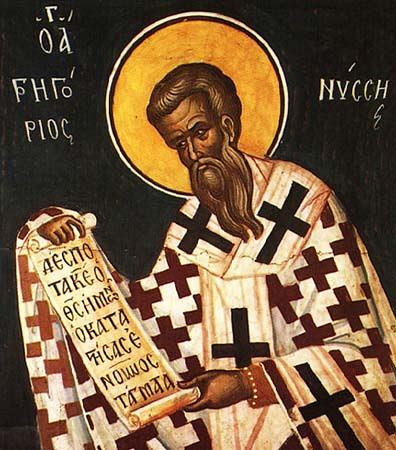
St. Gregory of Nyssa: On our image and likeness to God


 Being like the divine is not our function, for is it the product of human ability, but it is part of the generosity of God who freely, at the birth of the first man, gave our nature a likeness to Himself.
The human effort extends only to this: the removal of the filth which has accumulated through evil and the3 brining to light again the beauty in the soul which we had covered over. It is such a dogma that I think the Lord is teaching in the Gospel to those who are able to hear wisdom when it is mysteriously spoken: "The kingdom of God is within you" (Luke 17:21). This saying shows, I believe, that the goodness of God is not separated from our nature, or far away from those who choose to seek it, but it is ever present in each individual, unknown and forgotten when one is choked by the cares and pleasures of life, but discovered again when we turn our attention back to it.
+St. Gregory of Nyssa, from Ascetical Works, On Virginity.

Saturday, November 7, 2020

St. Nicholas Cabasilas: On God's destiny for mankind


 That humans should become gods and sons of God, that human nature should be honored with God's honor, that our clay should be raised to such a height of glory as to be equal in honor with the divine nature, equal to God... This is God's virtue which has covered the heavens.
+St. Nicholas Cabasilas, from On the Life in Christ, 1

Saturday, October 31, 2020

St. Maximos the Confessor: On love for others


 Let us love one another, and we shall be loved by God. Let us show longsuffering to each other, an God will show longsuffering towards our sins. Let us not return evil for the evil done to us (cf  Rom 12:17), and we shall not be punished according to our sins. For the forgiveness of our transgressions is to be found in our forgiveness of our brethren. And the mercy of God is to be found hidden in our compassion towards our neighbor... So you see, the Lord has given us a way in which we can be saved, and has endowed us eternally with the capacity to become children of God (cf John 1:12); thus it is on what we ourselves desire that our salvation depends.
+St. Maximos the Confessor, from Ascetic Discourse, #42.

Tuesday, October 6, 2020

+St. John Chrysostom: God's love for mankind


 The magnitude of His love for mankind! Christ regards the honor offered to Himself as inferior to love for our neighbor. "Let your worship of me be interrupted", Christ says, "in order that the love between you and your brother may be preserved." By these words, the Lord wants to show us that He values love dearly, and considers it a sacrifice higher than any other. Without this sacrifice, He accepts no others. In this way, Christ teaches us that the Holy Table does not accept those who harbor enmity among themselves.
+St. John Chrysostom, from Homily 16 on Matthew, #9

Sunday, September 27, 2020

St. John Chrysostom: God's surpassing love for mankind


 Such is the love of God for mankind that He never rejects genuine repentance, but even if someone were to go beyond the limit of evil and desired to return from there to the way of virtue, He would receive and approach him, doing everything to guide him to his former condition. In fact, He is still more loving: for even if one did not show all repentance - even the very least - He would reward him much for the little repentance shown.
It is not He who ever turns away from us, but rather we who detach ourselves from Him.
If you have sinned and fallen, rise, arise please. For the good and loving Master who was put to shame by your sin is beside you and does not reject cohabitation with you. Give Him your hand.
+St. John Chrysostom, from Letters to the Fallen Theodore

Friday, September 25, 2020

Fr. John Chryssavgis: Repentance as a Pascha


 Repentance is not a self-contained act: it is a passing over, a Pascha from death to life, a continual renewal of that life. It consists of a reversal of what has become the normal pattern of development, which is the movement from life to death. To experience this reversal in repentance is to have tasted of the glory and beauty of God; it is the mark of man's presence before God in the abundance of His mercy and of God's presence before man in the abyss of his weakness: "Set Your compassion over against our iniquities, and the abyss of Your lovingkindness against our transgression."1 It is the awareness of God's beauty that makes one realize the chasm that separates one from His gratuitous grace. The initiative belongs to God, but presupposes man's active acceptance, which is a way of perpetually receiving God within the heart, of God being embodied within man, of divine incarnation. Here God call man, and man responds to God and in doing so gains salvation and life abundant: "sorrow working repentance to salvation not to be repented of"(2 Cor 7:10). In repentance it is man's total limitation and insufficiency that is placed before God, not simply particular wrongdoings or transgressions.
+Fr. John Chryssavgis, from Repentance and Confession in the Orthodox Church, Introduction
1from Vespers of Pentecost, first kneeling prayer

Wednesday, September 23, 2020

St. Simeon the New Theologian: God's love and mercy toward us


 I know, O my Savior, that no other man hath so sinned against Thee as have I, no other man hath wrought such deeds as have I. But I know, also, that neither the magnitude of the transgression, nor the multitude of the sins can transcend the long suffering and unutterable love toward mankind of my God. According to thy mercy and condescension Thou cleansest those who repent with their whole heart; Thou enlightenest them and makest them participants of the light, and sharers of Thy Divinity. And, albeit it is strange for angels and men to comprehend, Thou ofttimes holdest converse with them as with Thy true friends.
+St. Simeon the New Theologian, from a prayer before Holy Communion, in The "Svit" prayer book.

Monday, September 21, 2020

St. Porphyrios the Kapsokalyvite: On The Church, angels and mankind


 The Church is without beginning, without end and eternal, just as the Triune God, her founder, is without beginning, without end, and eternal. She is uncreated just as God is uncreated. She existed before the ages, before the angels, before the creation of the world - "before the foundation of the world" (Eph 1:4) as the Apostle Paul says. She is a divine institution and in her "dwells the whole fullness of divinity" (Col 2:9). She is an expression of the richly varied wisdom of God. She is the mystery of mysteries. She was concealed and was revealed "in the last of times" (1 Pet 1:20). The Church remains unshaken because she is rooted in the love and wise providence of God.
 The three persons of the Holy Trinity constitute the eternal Church. The angels and human beings existed in the thought and love of the Triune God from the beginning. We human beings were not born now, we existed before the ages in God's omniscience.
+St. Porphyrios the Kapsokalyvite, in Wounded By Love: The Life and Wisdom of Elder Porphyrios, Part 2: The Wisdom of Elder Porphyrios, On The Church

Friday, September 18, 2020

Nicholas Arseniev: Christ in us, Christ in the other


 To Jacob Böhme1 after his conversion, the "whole external world with its substance, is a covering of the spiritual world"; he feels the presence of God in all creatures, even in herbs and grasses. But especially convincing and the most deeply moving of all these encounters with God in the world which surrounds us are - as we have already said - our encounters with God through and in our fellow-man. When one has known what it is to be in deep distress, alone, seeing no help around, and suddenly a helping hand stretches towards you and a friendly voice speaks comfort and love to you, surely one feels in such a moment that God has spoken, that God is near, that He has revealed Himself through the intermediary of the helping, loving fellow-creature. But it is even more moving to be given the immense privilege of suddenly becoming the channel, the bringer, the living representative of God's active, helping love in relation to one's fellow-man. The one who helps is sometimes even more innerly shaken and overwhelmed that the one who receives the benefaction. "Who am I, O Lord, that Thou dost that through me?" (cf. Ex 3:11). He feels the presence of the Lord in the suffering brother. It is one of the highest and most sacred experiences in our life, something which remains, which moves us ourselves deeply, awaking not self-complacency but deepest humility and gratitude. "O Lord, when have we seen Thee hungry and feed Thee, or thirsty and give Thee drink? When have we seen Thee a stranger and take Thee in, or naked and clothed Thee? Or when have we seen Thee sick, or in prison, and come unto Thee?’ And the King will answer and say to them, ‘Verily I say unto you, inasmuch as you have done it to one of the least of these My brethren, you have done it unto Me." (Matt 25:37-40). We feel the truth of these words, we feel His presence behind and in the suffering brother, even the least of our brethren, often so uninteresting, so average-looking, so helpless, so alone, but - so near to Him, so closely connected with Him. This is the immanence of the Transcendent God.
+Nicholas Arseniev, from Revelation of Life Eternal, chapter 1, Principles of Religious Cognition, section 5.

Jacob Böhme( +1624) German philosopher, mystic and Lutheran theologian.

Sunday, September 6, 2020

St. Gregory Palamas: Humility in response to God's Saving Love

If the Son of God had not come down from heaven we should have had no hope of going up to heaven. If He had not become incarnate, suffered in the flesh, risen and ascended for our sake, we should not have known God's surpassing love for us. If He had not taken flesh and endured the passion while we were still ungodly, we should not have desisted from the pride which so often lifts us up and drags us down. Now that we have been exalted without contributing anything, we stay humble, and as we regard with understanding the greatness of God's promise and benevolence we grow in humility; from which comes salvation.
+St. Gregory Palamas, from St. Gregory Palamas, The Homilies, Homily 16 On Great and Holy Saturday.