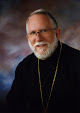
Showing posts with label -Elder Aimilianos of Simonopetra. Show all posts

Sunday, February 21, 2021

Elder Aimilianos of Simonopetra: On the monastic life


 You did not come here today to flee from human beings but from human concerns. You did not come to break away from society, but from vanity and corruption. But even that is not what you came for, that is to flee from human concerns and vanity. That's not enough.
You must work wonders and "signs and wonders" (cf Acts 5:12) in your lives, or else you are not disciples of Christ. These will be the signs that you are His disciples: learn to exercise the eyes of your souls to see God working in secret. Let your spirits become accustomed to and practiced in searching out the depths of God. Your hearts and powers of reasoning should not be untrained vines, overgrown with passions, weaknesses, pettiness and personal desires.
The soul of each one of you should be "a walled garden" (cf. SS 4:12), as Scripture puts it, in the farthest corner of which your treasure, Christ, will be stored. Or rather, each one of you, with pangs, will be bearing and embodying the Word.
God will be present every day among you in the Holy Spirit. In a way, God will forever be getting under your feet. He will talk to you, you will ask Him and He will answer you.
Believe this my children. Desire it. "Wait upon the Lord" (cf Ps 26:14) and you will see and feel things you didn't dare hope for and didn't even imagine. Keep your gaze fixed on God. See Him before you, behind everything and everybody. Don't be cast down by or concerned about any difficulties which might come your way: anxieties, desertions, impasses or Golgothas.
Do but delight in the Lord, and He will give you your hearts' desires (ps 36:4).
+Elder Aimilianos of Simonopetra, from On the occasion of the Installation of the Monastic Sisterhood of the Saints Theodore in Meteora, in Spiritual Instruction and Discourses, volume 1, The Authentic Seal

Monday, January 11, 2021

Elder Aimilianos of Simonopetra: The Jesus Prayer as our Deification


 The prayer of Jesus is not an occasional petition that we direct to God. It is in fact our own deification. There would be no reason to stay all day in conversation with God if it were simply a matter of addressing words to him. God hears very well, even to the noises of our bowels. There would be no need to pray day and night. Rather, the prayer consists before all in feeding upon Christ, the Lamb of God, and of drinking the Savior Himself, by the invocation of His Holy Name. It is an intoxicating beverage, one that carries man into the heavens. It is the whole Christ whom we then absorb, and we become thus participants in God, reflecting - as Christ Himself - the divine attributes. We share in God and subsequently act, we too, mysteriously as gods.
+Elder Aimilianos of Simonopetra, from The Living Witness of the Holy Mountain, Mount Athos: Sacred Vessel of the Prayer of Jesus

Sunday, December 6, 2020

Elder Aimilianos of Simonopetra: Christ in the midst


 What, then, is our gathering together in the Liturgy, our membership in the Church? When two or three of you are gathered together, you can become Christ, because "where two or three are gathered in My name, I am there in the midst of them" (Mt 18:20). It doesn't have the sense of some fourth person joining us, but signifies who we are together, it is what we become when we are together, because in the midst of you, where you are, is Christ. So you cease to be yourselves and together become Christ.
+Elder Aimilianos of Simonopetra, from The Way of the Spirit, Reflections on Life in God, Chapter 6 Awaiting Pentecost

Wednesday, November 18, 2020

Elder Aimilianos of Simonopetra: A Prayer for Monastics


 I would like simply to express a single prayer for all of us. Let us have confidence in God, the memory of Him and a diligent love for Him. What are we, after all? And what is He? All of humanity, the whole universe, and all of us here with all the greatness of our hearts and labors and love, would not be able to meet the breadth of God's little toe, nor the billionth part of His holiness.
So let us admit to ourselves that we are useless and fit as witnesses only to be crushed beneath the tread of that toe of God's love, be trodden in the winepress of the ascetic and Christ-delighting monastic life, be poured out as new wine to gladden the Lord and be changed into the sacrament of the world to come.
+Elder Aimilianos of Simonopetra, from Martyrdom: Foundation of Orthodox Monasticism, in The Living Witness of the Holy Mountain.

Thursday, September 17, 2020

Elder Aimilianos of Simonopetra: Spiritual Life


The life of the faithful should be filled with joy and gladness, which are among the fruits of the Holy Spirit. The Holy Spirit Himself gives these fruits both to our souls and to our community1. At the same time, our life must be something that transcends the world, informed by theological thought and feeling, manifesting the experience of eternity in the place and time in which we live. We are obliged truly to be people of eternity (emphasis mine). If we are not thinking theologically, and if our relationships are not relationships of essential contact with God, then our life will not only be prosaic and vain, but also an object of ridicule for demons, sinners, and all those who hate us. At the same time, it will be a tremendous disappointment for us in the eyes of God, since we will never be able to rise beyond the height of our own heads, even though our "citizenship is in heaven" (Phil 3:20).
+Elder Aimilianos of Simonopetra, from The Mystical Marriage, chapter 4.

1 The elder was speaking to a monastic audience.

Wednesday, July 29, 2020

Elder Aimilianos of Simonopetra: Clear perspective

The only clear perspective we can have on things is determined by our relation to the Lord. The only way to know where a person is in his life - if he is coming, or going, or getting lost - is by reference to the Lord and His judgments. It is only the "mind of the Lord" (Is 40:13), the vantage point from which He sees things, that enables us to see and understand what somebody else is doing. No human criterion, no earthly calculation, no system or theory, no opinion, power, or desire can vindicate a person: for that you need the perspective provided  by God. It is from there that we can see how it is with others. And how is it for me, when looked at from where the Lord is sitting? Am I heading in the right direction, or moving away from it?
+Elder Aimilianos of Simonopetra, from The Way of the Spirit, Reflections on Life in God, 5. Have we Received the Holy Spirit

Wednesday, July 8, 2020

Elder Aimilianos of Simonopetra: The role of pain

At the beginning, after the Fall, man himself sensed and realized that what had appeared as a curse - namely, God's decision that he should live by the sweat of his brow, bear children with pain, and rediscover paradise "through many tribulations" (Acts 14:22). hid what was in fact God's love, that it comprised a way and means for man's second creation, for his renewal who had fallen away and was dying. On his maturing, man recognized in his sufferings, in his labor and sweat, and even in his death, that his pain encompassed a means of expression, a living possibility for his presenting and revealing himself to God, of confessing to Him his longing for the deification now lost. This is to say that he, man, found no better way of expressing his yearning for deification that by suffering pain for the sake of God.
+Elder Aimilianos of Simonopetra, from Martyrdom: Foundation of Orthodox Monasticism, in The Living Witness of the Holy Mountain: Contemporary Voices from Mount Athos, translation with introduction and notes by Archbishop Alexander (Golitzin).

Monday, June 29, 2020

If the monk can associate the prayer with his life in the common-life monastery, the married Christian can join the prayer in the same way to his or her life at its very hearth. The capricious husband, the ill-tempered wife, the lazy child... he or she will put all this aside before being overwhelmed by it, and then lift up his or her thoughts toward God. No obstacle, nor any trial, can interrupt our progress toward God. If the prayer is everything we have truly to say, what then is our life worth without it? It seems to me that without the prayer, our life is like a car travelling along a road. When the car finally stops somewhere, what then? Don't we then perceive how ephemeral we are? The whole world itself, without the prayer, is like such a moving car. The earth spins on its axis, but one day it will stop forever. Heaven and earth will vanish away, will disappear, like all the cars that we take first to the repairman and then finally to the junkyard. A heart that lacks the prayer also seems to me like a plastic bag, the sort that one uses for a moment to carry something in, but then throws into the garbage can the minute it tears. It is the prayer that give meaning to our existence, and that is because it is the prayer which gives us God.
+Elder Aimilianos of Simonopetra, from Mount Athos: Sacred Vessel of the Prayer of Jesus, in The Living Witness of the Holy Mountain, by Archbishop Alexander (Golitzin).

Friday, June 5, 2020

Elder Aimilianos of Simonopetra: Love and Prayer

Prayer is the transcendence of time and thus an entry into the timelessness, eternity, perfection, and splendor of God. Prayer is our inclusion in the life of God, our perichoresis in God, and, if I may put it this way, our obliteration in God, so that we might become one with Him. This is what happens in prayer; this is what prayer is. And this is why love and prayer are so closely aligned that each can signify the other.
+ Elder Aimilianos of Simonopetra, from The Mystical Marriage